
01
Understanding the terms
Diverticulosis
Small pouches called diverticula are present in the wall of the large bowel but are not causing symptoms. They become more common with age and many people never know they have them.
Diverticular disease
Diverticula are present and associated with ongoing or recurring symptoms such as lower abdominal pain, bloating or a change in bowel habit, without acute inflammation.
Diverticulitis
One or more diverticula become inflamed or infected. This usually causes more persistent or severe pain and may be accompanied by fever or feeling unwell.
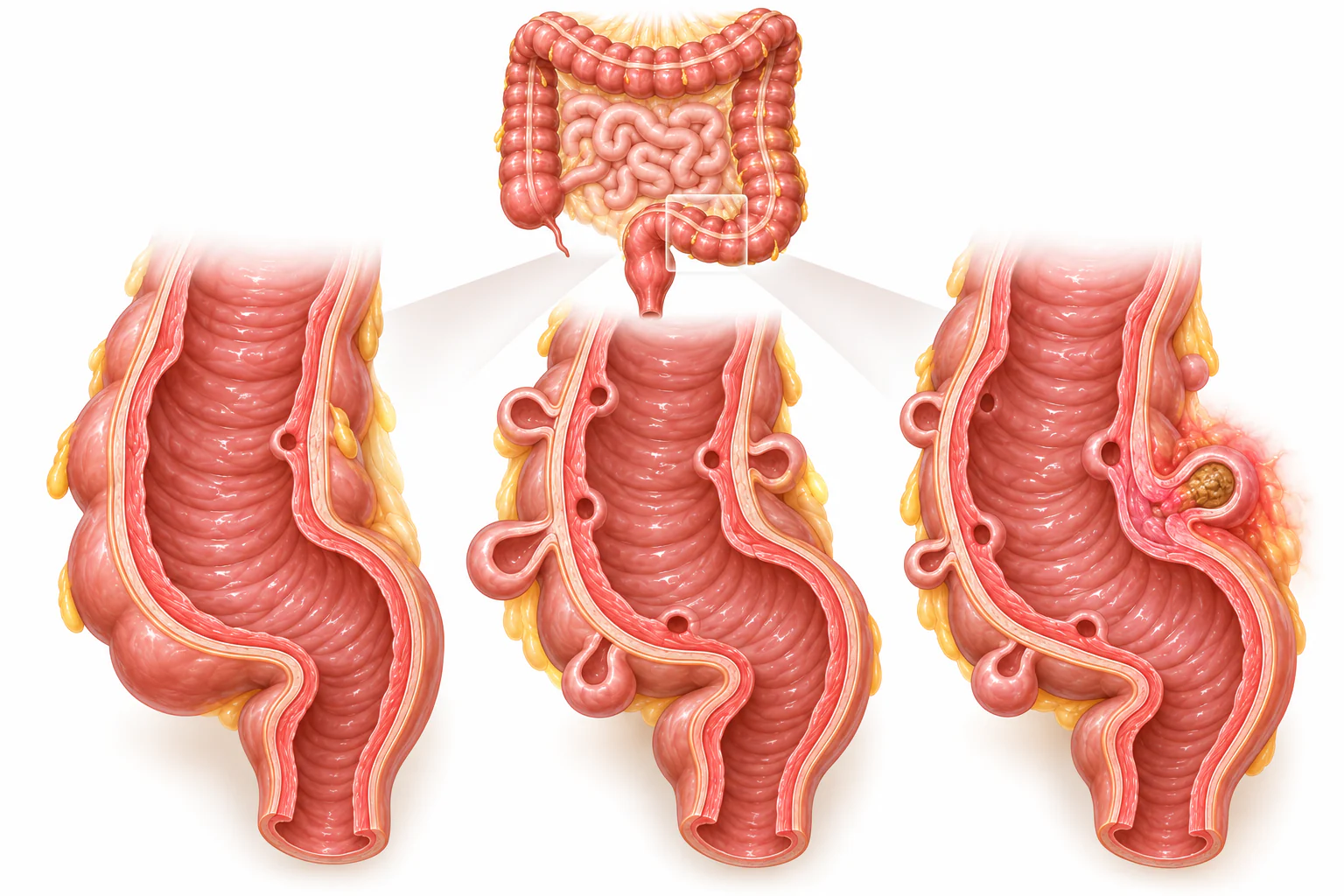
Diverticula are outward pouches in the bowel wall. Their presence alone is not the same as diverticulitis; the image on the right shows local inflammation affecting one pouch.
© 2026 Dyslexic Dietitian / DD Medical Atlas. All rights reserved.02
Symptoms and diagnosis
Diverticular disease may cause intermittent lower abdominal pain—often on the left—bloating, constipation, diarrhoea or mucus. Pain may become worse after eating and improve after passing stool or wind.
These symptoms overlap with irritable bowel syndrome, inflammatory bowel disease and other bowel conditions. Blood tests, stool tests, CT imaging, colonoscopy or flexible sigmoidoscopy may be used depending on the symptoms and clinical assessment.
03
Fibre for long-term bowel health
When diverticular disease is stable, NICE advises a healthy balanced diet containing whole grains, fruit and vegetables. If tolerated, a higher-fibre pattern may improve stool consistency and symptoms, although benefits can take several weeks.
UK guidance commonly uses around 30 g fibre each day as a population goal for adults, but the most appropriate amount is individual. A sudden large increase can worsen wind, bloating or discomfort.
04
Increasing fibre comfortably
- Increase fibre gradually over several weeks rather than changing everything at once.
- Add one extra fibre-rich food at a time so its effect is easier to assess.
- Drink enough fluid; fibre works best when adequate fluid is available.
- Spread fibre-containing foods across the day instead of concentrating them in one meal.
- Regular movement can support bowel function and reduce constipation.
If food-based fibre is not tolerated or constipation persists, a healthcare professional may suggest a bulk-forming laxative. Take it with the recommended amount of fluid and follow professional or product instructions.
A comfortable toileting position
Supporting the feet on a stable footstool can raise the knees above hip level. Leaning slightly forward with the forearms supported on the thighs and relaxing the abdomen may create a more open anorectal angle and make bowel emptying easier without forceful straining.
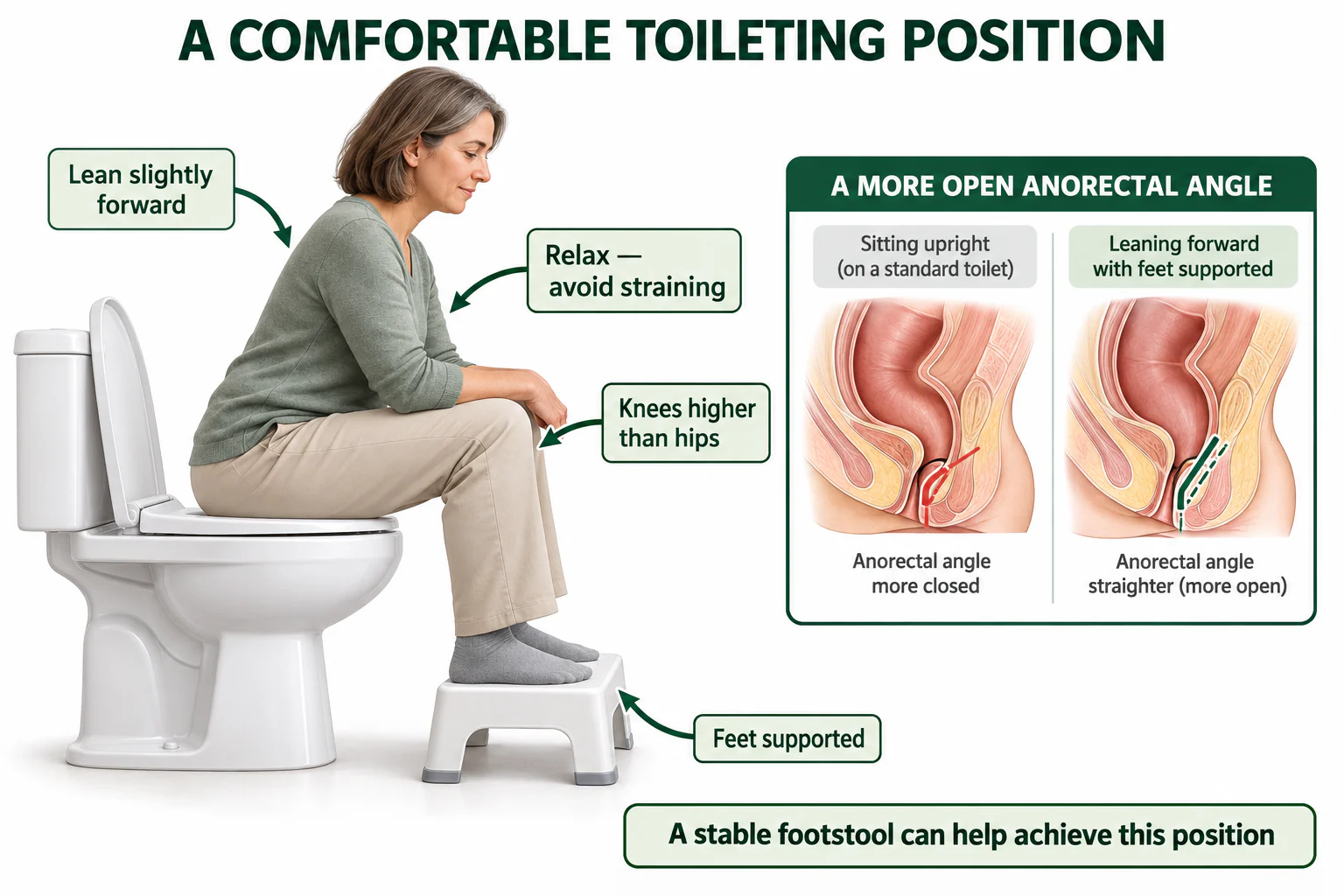
Keep both feet supported, raise the knees above the hips, lean slightly forward and relax. The footstool must be stable. This position may assist bowel emptying but does not replace assessment of persistent constipation or difficulty passing stool.
© 2026 Dyslexic Dietitian / DD Medical Atlas. All rights reserved.05
Do nuts, seeds, popcorn or fruit skins need to be avoided?
No routine restriction is needed. NICE advises that people with diverticulosis do not need to avoid seeds, nuts, popcorn or fruit skins. There is no good evidence that these foods become trapped in diverticula and cause inflammation.
Individual tolerance still matters. A food can be reduced or adapted if it repeatedly worsens symptoms, but removing whole food groups without a clear reason may unnecessarily reduce fibre and dietary variety.
06
Food during possible diverticulitis
Severe or constant abdominal pain, fever, vomiting or feeling systemically unwell may indicate acute diverticulitis and needs medical assessment. Diet alone cannot diagnose or treat an acute episode.
Some people with uncomplicated diverticulitis can tolerate their usual diet. Others may temporarily manage softer or lower-fibre foods more comfortably because of pain, nausea or reduced appetite. Follow the advice of the clinician treating the episode rather than routinely restricting fibre for prolonged periods.
When symptoms settle, fibre-containing foods can usually be reintroduced gradually according to tolerance. Ask for dietetic support if intake has become very limited, weight is falling or you are unsure how to rebuild the diet.
07
Other factors that may help
Alongside an appropriate diet, regular physical activity, stopping smoking and maintaining a weight that supports health may reduce longer-term risk. Avoiding constipation can also reduce discomfort and straining.
NICE advises avoiding non-steroidal anti-inflammatory medicines such as ibuprofen and opioid painkillers such as codeine where possible because they may increase the risk of complications. Do not stop a prescribed medicine without discussing it with a doctor or pharmacist. Paracetamol may be considered for pain when suitable for you.
08
When to seek medical help
Contact a GP or NHS 111 urgently if abdominal pain is worsening or does not go away, you have a high temperature or chills, there is blood or mucus in your stool, or you are repeatedly vomiting and cannot keep fluids down.
Seek emergency help for severe abdominal pain with a rigid or very tender abdomen, heavy or continuous rectal bleeding, fainting, confusion, marked breathing difficulty or rapid deterioration.
09
How a dietitian can help with diverticular disease
A dietitian can assess fibre and fluid intake, stool consistency, constipation and symptom patterns, then help increase fibre gradually when appropriate. Advice can focus on tolerable sources and realistic portions rather than automatically avoiding nuts, seeds, skins or other foods without an individual reason.
Following suspected or confirmed diverticulitis, a dietitian can help rebuild dietary variety as symptoms settle and protect energy and protein intake if appetite has fallen. They can also distinguish possible overlapping IBS-type symptoms from food intolerance, reduce unnecessary long-term restriction and advise when pain, fever, bleeding or worsening symptoms need medical review rather than further dietary changes.
View consultation information10