
01
Understanding IBD
Inflammatory bowel disease (IBD) describes long-term conditions involving inflammation in the digestive system. The two best-known forms are Crohn’s disease and ulcerative colitis.
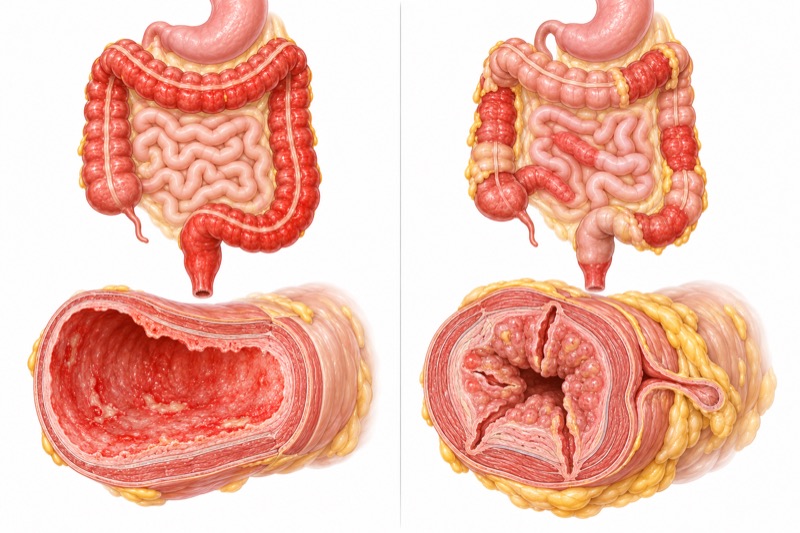
Crohn’s disease
Can affect any part of the digestive system, from the mouth to the anus. Inflammation may extend through several layers of the bowel wall.
Ulcerative colitis
Affects the large bowel and rectum. Inflammation begins in the rectum and may extend through part or all of the colon.
IBD is different from irritable bowel syndrome (IBS), although some symptoms can overlap. Symptoms may include diarrhoea, abdominal pain, blood or mucus in stools, tiredness, poor appetite and unplanned weight loss.
02
Newly diagnosed? Start here
A diagnosis can make eating feel uncertain. You do not need to find a perfect diet or remove multiple foods immediately.
- Keep taking medication as prescribed. Food does not replace medical treatment.
- Ask how to contact your IBD team and what to do if your symptoms worsen.
- Continue with as varied a diet as you comfortably tolerate unless your clinical team advises otherwise.
- Record symptoms, food intake and questions if this helps you spot patterns—but avoid assuming that one difficult day proves a food is a trigger.
- Ask for dietetic support if eating is becoming restricted or you are losing weight.
03
Eating during a flare
A flare is a return or worsening of inflammation and symptoms. Contact your IBD team or GP for advice rather than trying to manage a suspected flare through diet alone.
Appetite is often reduced during a flare because you feel unwell. At the same time, inflammation may increase nutritional requirements slightly—by approximately 10% for some people. This combination can lead to weight loss and loss of muscle when nutritional intake is reduced.
During a flare, the priority is often to maintain hydration and take in enough energy and protein. A “little and often” approach, using smaller regular meals and nourishing snacks, can make food more manageable, help to prevent further weight loss and support recovery. Depending on your symptoms, you may find it easier to:
- eat smaller meals and snacks more often;
- choose softer or simpler foods that you already know you tolerate;
- drink regularly, especially if you have diarrhoea or vomiting;
- include nourishing drinks if solid food is difficult;
- temporarily reduce or adjust fibre when frequent bowel motions, diarrhoea or urgency make this helpful, or when a diagnosed narrowing requires individual advice.
Fibre does not necessarily make intestinal inflammation worse, and reducing it does not treat the underlying inflammation. However, fibre can increase stool volume. For some people with active IBD who are experiencing frequent bowel motions, diarrhoea or urgency, a temporary reduction may help to manage these symptoms.
These are flexible strategies, not a universal flare diet. Fibre should be reintroduced as symptoms improve, where tolerated. People with a known or suspected stricture need individual guidance from their IBD team or dietitian. A low-fibre or liquid diet is not suitable for everyone and should not be continued longer than necessary without professional guidance.
04
When IBD is stable
When symptoms are settled, aim for a varied and balanced pattern of eating that supports your overall health. Where tolerated, this can include:
- a range of fruit and vegetables;
- starchy carbohydrates and wholegrains;
- protein foods such as fish, eggs, meat, beans, pulses, tofu or alternatives;
- dairy foods or suitable fortified alternatives;
- sources of unsaturated fat and enough fluid.
Reintroduce foods gradually after a period of restriction. If symptoms continue despite controlled inflammation, discuss them with your IBD team or dietitian rather than repeatedly removing foods on your own.
05
Nutritional concerns
Inflammation, reduced intake, diarrhoea, bleeding, surgery and some medicines can affect nutritional status. Your needs depend on which part of the bowel is affected and your individual treatment history.
Possible areas to monitor
Blood tests and a clinical assessment should guide supplements. More is not always better, and supplements can interact with medicines.
If appetite is low or weight is falling
Try eating little and often, enrich meals with energy and protein, and use nourishing snacks or drinks. Ask for help early if weight loss continues, eating feels difficult or your list of “safe” foods is getting smaller.
06
Individual circumstances
Generic healthy-eating advice may need adapting if you have a stricture, a stoma, bile acid malabsorption, a fistula, significant bowel surgery or another medical condition.
Strictures
A stricture is a narrowing in the bowel. The type and amount of fibre that is safe may need individual adjustment. Seek urgent medical advice if you develop severe pain, persistent vomiting or marked abdominal swelling.
After surgery or with a stoma
Fluid, salt and nutrient needs can change after surgery. Advice should be based on the type and length of bowel removed, how the stoma is functioning and any ongoing symptoms.
Special diets
Some dietary treatments have a role in specific circumstances, but they should have a clear purpose, a review plan and appropriate supervision. Do not start a highly restrictive diet because it worked for someone else.
07
When to get medical help
If you think you are having a flare, follow your personalised care plan or contact your IBD team or GP. If they are unavailable and you need urgent advice, use NHS 111.
These include severe abdominal pain, non-stop or heavy rectal bleeding, vomiting blood, severe dehydration, or severe pain with a high temperature and rapid heartbeat.
This list is not exhaustive. Seek help whenever symptoms feel severe, unusual or rapidly worsening.
08
How a dietitian can help with IBD
An IBD dietitian can adapt nutrition advice to active inflammation, recovery and remission. They can assess appetite, weight and muscle loss, bowel symptoms, blood results, medicines and surgery, then help you meet increased energy and protein needs without making symptoms harder to manage.
Support may include short-term changes to fibre when diarrhoea, urgency or a diagnosed narrowing makes this appropriate; correcting iron, vitamin B12, folate, vitamin D or other deficiencies; using food fortification or prescribed supplements; and adapting intake around a stricture, stoma or bowel surgery. The aim is to maintain the widest nutritious diet you tolerate and review restrictions as the disease changes.
View consultation information09