
01
Understanding IBS
Irritable bowel syndrome (IBS) is a long-term condition that affects how the bowel functions. It can cause abdominal pain, bloating and changes in bowel habit without visible damage or inflammation explaining the symptoms.
Symptoms can fluctuate. Some people mainly experience diarrhoea, some mainly experience constipation, and others alternate between the two. Urgency, straining, incomplete emptying, mucus, nausea and tiredness can also occur.
IBS is not IBD
IBS affects bowel function. Inflammatory bowel disease—including Crohn’s disease and ulcerative colitis—involves inflammation and requires different investigation and treatment.
Symptoms are individual
Food, stress, sleep, hormones, medicines, previous infection and the sensitivity and movement of the bowel may all influence symptoms.
02
Diagnosis and assessment
IBS should be diagnosed from a recognised pattern of symptoms, an appropriate clinical assessment and tests to exclude important alternatives. It should not simply be assumed because initial investigations are normal.
NICE recommends blood tests including a full blood count, inflammatory markers and coeliac disease antibodies for people who meet the diagnostic criteria. Further tests depend on the person’s symptoms, age, history and examination.
Rome IV diagnostic criteria
The Rome IV criteria provide a standard framework used in clinical practice and research. They describe recurrent abdominal pain, on average at least one day per week during the previous three months, associated with at least two of the following:
- the pain is related to opening the bowels;
- it is associated with a change in how often stools are passed;
- it is associated with a change in stool form or appearance.
The criteria should have been present during the previous three months, with symptoms beginning at least six months before diagnosis. They support a professional assessment; they are not intended as a self-diagnosis checklist.
IBS bowel-pattern subtypes
IBS may be classified according to the predominant stool pattern. The distribution below comes from people meeting Rome IV criteria in a 26-country internet survey.
These are illustrative survey findings, not universal prevalence rates. Proportions vary between populations and methods, and an individual’s subtype can change over time.
03
Start with manageable changes
There is no single “IBS diet”. Begin with your usual pattern and change one or two things at a time so you can judge whether they help.
- Eat regular meals and avoid long gaps or routinely skipping meals.
- Slow down where possible and allow time to eat.
- Drink regularly, with water and non-caffeinated drinks making up most of your fluid.
- Review large amounts of caffeine, alcohol and fizzy drinks if they worsen symptoms.
- Keep a short symptom record if useful, but avoid monitoring every mouthful indefinitely.
- Make changes gradually rather than removing several food groups at once.
Regular physical activity, adequate sleep and time for relaxation can also support symptom management.
04
Finding the right fibre balance
More fibre is not always better for IBS. The type, amount and speed of change all matter.
Soluble fibre
Foods such as oats and linseeds, and supplements such as ispaghula husk, may help some people. Increase gradually and include enough fluid.
Insoluble fibre
Large amounts of bran and very coarse wholegrain foods can make pain, bloating or diarrhoea worse for some people.
Constipation, diarrhoea and bloating may each need a different approach. A dietitian can help you adjust fibre without making the diet unnecessarily limited.
05
Match changes to your symptoms
Diarrhoea and urgency
Review caffeine, alcohol, very fatty meals and sorbitol found in some sugar-free sweets, chewing gum and drinks. Do not reduce fluid intake to try to control diarrhoea.
Constipation
Regular meals, sufficient fluid, gradual use of suitable soluble fibre and movement may help. Speak to a pharmacist or GP if laxatives may be needed.
Bloating and wind
Eating slowly, reducing fizzy drinks and assessing meal size can be useful. Oats or up to one tablespoon of linseeds daily may help some people, although changes should be gradual.
06
The low-FODMAP approach
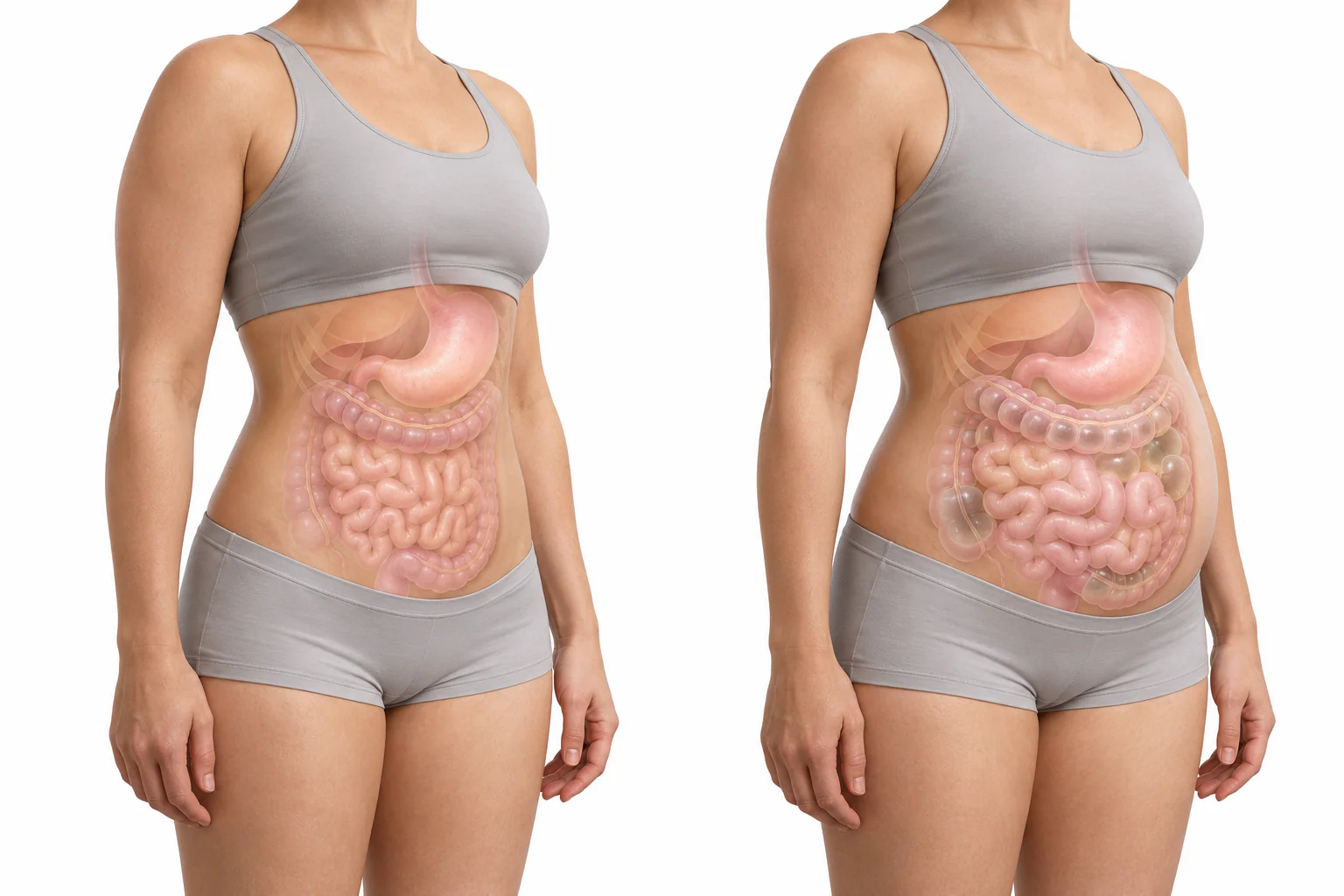
FODMAPs are fermentable carbohydrates found across many nutritious foods. In some people with IBS, they draw water into the bowel or are fermented by gut bacteria, contributing to pain, bloating, wind or altered bowel habit.
A low-FODMAP diet is not intended to be a permanent list of foods to avoid. It is a structured process:
- Short restriction: reduce high-FODMAP foods for a limited period.
- Reintroduction: test FODMAP groups systematically to identify tolerance.
- Personalisation: return as much variety as possible while managing symptoms.

Examples of lower-FODMAP foods
Suitable choices depend on portion size and individual needs, but examples can include:
- rice, oats, quinoa, potatoes, rice noodles and suitable breads or pasta;
- carrots, cucumber, aubergine, green beans, lettuce, potatoes and courgette;
- kiwifruit, oranges, pineapple, strawberries, blueberries and firm bananas;
- lactose-free milk or yoghurt, hard cheeses and calcium-fortified suitable alternatives;
- plain meat, poultry, fish, eggs, firm tofu and tempeh;
- walnuts, peanuts, macadamias and seeds in suitable portions.
FODMAP content can change with the type of food, portion size, processing and ripeness. A laboratory-tested resource such as the Monash FODMAP app is more reliable than an unsourced food list.
Why can FODMAPs trigger symptoms?
FODMAPs are short-chain carbohydrates that may be poorly absorbed in the small bowel. They can draw water into the intestine and then be rapidly fermented by bacteria in the large bowel. This can increase fluid and gas within the bowel, adding to intestinal volume and pressure. In a sensitive gut, that stretching may be experienced as pain, bloating, wind or a change in bowel habit.
Some FODMAPs—particularly fructans and galacto-oligosaccharides—also have prebiotic effects because they provide fuel for particular gut bacteria. Not every FODMAP is classed as a prebiotic, and fermentation is a normal process; symptoms depend on the amount eaten and the individual response.
Prebiotic
A substrate—often a type of fermentable fibre or carbohydrate—that is used by gut microorganisms and can support beneficial changes in the gut microbiome. It is food for selected microbes, not a live organism.
Probiotic
A live microorganism that, when provided in an adequate amount, may offer a health benefit. Effects are strain- and condition-specific, so different probiotic products are not interchangeable.
07
The gut–brain connection
The gut and brain communicate continuously in both directions through nerves, hormones, immune pathways and chemical signals. This relationship is known as the gut–brain axis.
During periods of stress or anxiety, the body’s stress response can change the speed and pattern of bowel movement, increase gut sensitivity and make sensations such as stretching, gas or contractions feel more uncomfortable. Stress may also affect sleep, appetite, meal patterns and how much attention the brain gives to symptoms. This can contribute to pain, bloating, diarrhoea, constipation or urgency in some people.
The relationship also works in the opposite direction. Unpredictable bowel symptoms, fear of urgency and worries about eating or leaving home can increase stress and anxiety, creating a cycle in which the gut and brain continue to influence one another.
Regular sleep, physical activity, relaxation or breathing techniques, cognitive behavioural therapy and gut-directed hypnotherapy can be useful parts of treatment for some people, particularly when symptoms persist. They can complement dietary and medical care rather than replace it.
08
When to seek further help
Arrange medical review if symptoms persist despite first-line measures, significantly affect daily life, or lead you to avoid many foods. New symptoms should not automatically be attributed to an existing IBS diagnosis.
09
How a dietitian can help with IBS
An IBS dietitian can relate abdominal pain, bloating and bowel habit to meal patterns, fibre type and quantity, fluid, caffeine, alcohol and other repeatable triggers. Advice can then be matched to constipation-predominant, diarrhoea-predominant or mixed symptoms instead of applying one restrictive “IBS diet” to everyone.
If first-line changes are insufficient, a dietitian can supervise the three-stage low-FODMAP process: short-term restriction, structured reintroduction and long-term personalisation. This helps identify tolerance while restoring variety and protecting fibre, calcium and overall nutritional adequacy. They can also recognise when weight loss, bleeding, anaemia or other warning signs require medical reassessment.
View consultation information10
Trusted information
- NICE: Irritable bowel syndrome in adults—recommendations
- NHS: Irritable bowel syndrome
- NHS: Symptoms of IBS and when to seek help
- Rome Foundation: Rome IV diagnostic criteria
- Rome Foundation Global Study: IBS subtype distribution
- Monash University: High- and low-FODMAP foods
- Monash University: Fructans, GOS and fermentation