
01
What nutritional support means
Nutritional support helps someone meet their energy, protein, fluid, vitamin and mineral needs when ordinary eating has become difficult or insufficient. It may involve changes to meal timing, fortified foods, snacks, nourishing drinks, prescribed oral nutritional supplements or, in some situations, tube or intravenous feeding managed by a specialist team.
The approach should match the cause of the problem, swallowing safety, medical needs, food preferences and the person’s goals. Advice designed for weight loss or a generally “healthy” low-fat diet may be inappropriate when preventing further weight loss is the priority.
02
Recognising nutritional risk
Malnutrition means the body is not receiving or using enough nutrition. It can affect people at any body size; a person does not need to look underweight to be at risk.
Possible signs
Unplanned weight loss, looser clothes or jewellery, reduced appetite, tiredness, weakness, loss of muscle, poor wound healing, recurrent infections or taking longer to recover from illness.
Clinical screening
A healthcare professional may review weight, BMI, percentage weight loss, recent food intake and the effect of illness. Tools such as the Malnutrition Universal Screening Tool (MUST) can support—not replace—clinical assessment.
03
Why appetite or intake may fall
Reduced intake can have more than one cause, and treating the cause may improve nutrition more effectively than simply encouraging someone to eat more.
Disease-related malnutrition
When people are unwell, symptoms such as pain, nausea, fatigue, breathlessness or feeling generally unwell can reduce appetite and food intake. At the same time, some acute and chronic diseases cause inflammation or place additional demands on the body, which may increase energy and protein requirements.
This combination of eating less while the body needs more can lead to further weight and muscle loss. Poor nutritional status may reduce strength and immune function, delay wound healing, make treatment harder to tolerate and slow recovery from illness.
Unintentional weight loss can also be associated with conditions requiring medical investigation. Arrange a GP or specialist review rather than assuming that age, stress or a small appetite is the only explanation.
04
A little-and-often approach
Large meals may feel overwhelming when appetite is poor. Smaller portions offered regularly can make the same overall intake more achievable.
- Aim for three smaller meals plus two or three snacks or nourishing drinks.
- Eat when appetite or energy is usually best, even if this is not a traditional mealtime.
- Keep convenient foods within reach and accept help with shopping or preparation.
- Choose foods that are enjoyable and easy to eat; variety can return as appetite improves.
- If drinks cause fullness, take most fluid between meals while maintaining adequate hydration.
05
Adding nutrition without much more volume
Food fortification—sometimes called a “food first” approach—increases the energy and protein in familiar meals without making the portion much larger. It is often tried when someone can still eat and swallow safely but cannot manage enough ordinary food. The most suitable additions depend on allergies, medical conditions, texture needs and preferences.
Add protein
Consider milk powder, Greek-style yoghurt, cheese, eggs, beans, lentils, tofu, fish, meat or nut butter where appropriate.
Add energy
Consider oil, butter or spread, cream, full-fat dairy, avocado, ground nuts, seeds or smooth nut butter in manageable amounts.
Practical ways to fortify food
- Make fortified milk by adding skimmed milk powder to full-fat milk, following a recipe advised by a dietitian.
- Use fortified milk in porridge, cereal, soup, sauces, custard and hot drinks.
- Add cheese, cream, yoghurt or milk powder to mashed potato, scrambled egg, soup and sauces.
- Add oil, butter or spread to vegetables, pasta, rice and potatoes where appropriate.
- Add smooth nut butter, ground nuts or seeds to toast, porridge, yoghurt or smoothies if safe and tolerated.
- Choose nourishing snacks such as yoghurt, cheese and crackers, milky puddings, eggs on toast or hummus with bread.
“Diet”, reduced-fat and low-calorie products may be less useful while preventing further loss or restoring weight is the priority. Fortification should still provide a mixture of protein, energy, vitamins and minerals rather than relying mainly on sugar or fat.
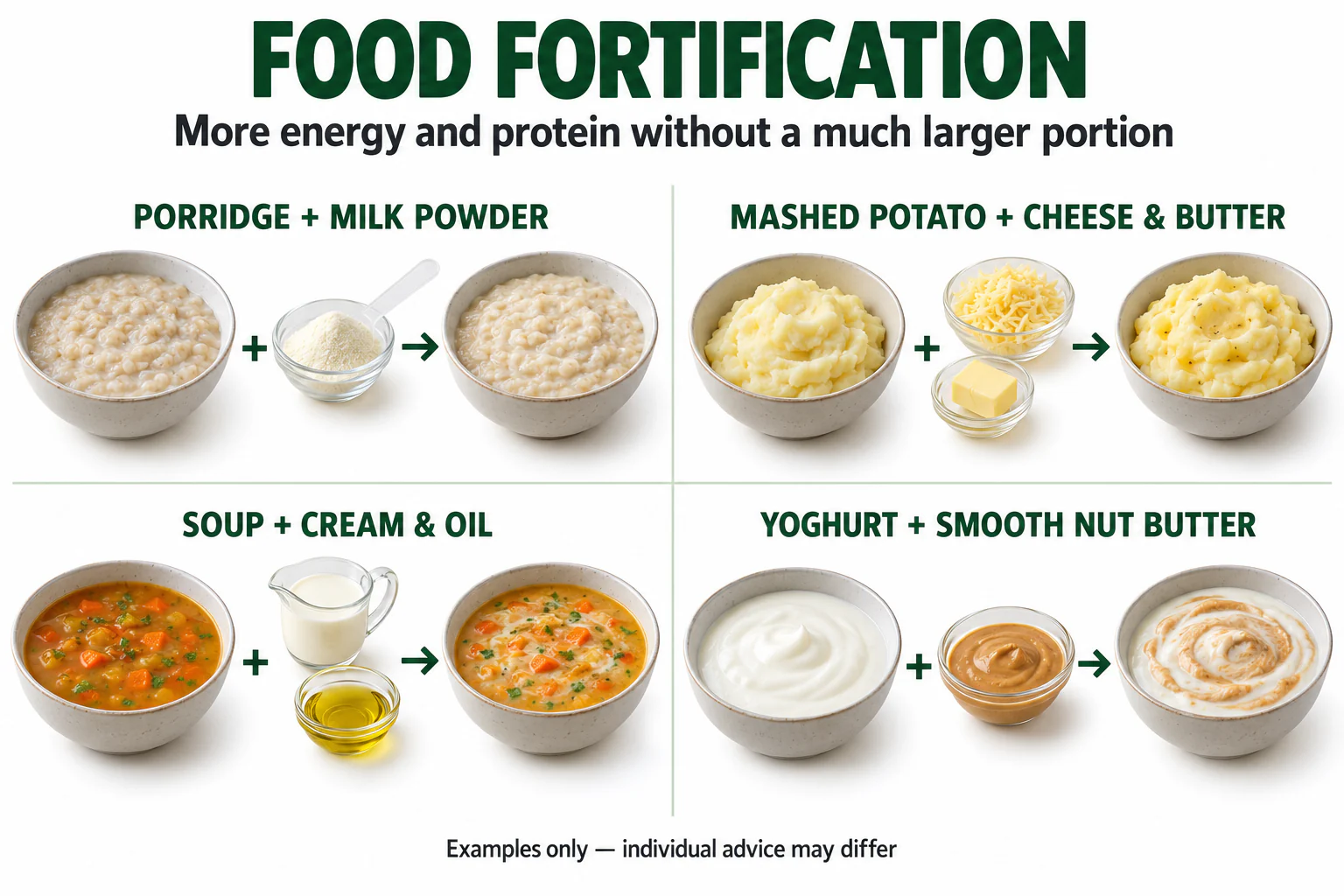
Adding small amounts of energy- and protein-containing ingredients can enrich familiar foods without making the finished portion much larger. These are examples only; individual advice may differ.
© 2026 Dyslexic Dietitian / DD Medical Atlas. All rights reserved.06
Protein, movement and protecting muscle
Illness, inactivity and inadequate intake can lead to loss of muscle as well as body fat. Muscle supports strength, balance, breathing, recovery, immunity and the ability to carry out everyday activities.
Include a protein-rich food at meals and, where helpful, snacks. Examples include eggs, dairy or fortified alternatives, fish, poultry, meat, beans, lentils, tofu, nuts and seeds. The amount required varies with body size, illness, wounds, kidney function and activity, so a dietitian may recommend an individual target.
Safe movement and resistance activity can help maintain or rebuild muscle. This may start with walking, repeated sit-to-stand movements or exercises advised by a physiotherapist. Activity should be adapted to current strength, balance and medical condition.
07
Nourishing drinks and oral nutritional supplements
Milk, fortified milk, smoothies, yoghurt drinks, hot chocolate and milky coffee can provide more nutrition than tea, coffee or water alone. They should complement meals and snacks where possible rather than unintentionally replacing them.
When supplements may be advised
A doctor or dietitian may advise oral nutritional supplements when someone is malnourished or at risk of malnutrition and ordinary food, snacks and fortification are not meeting their needs—or when illness makes a food-first approach impractical. Supplements may also be used alongside food from the start when nutritional risk is higher.
These are specially formulated products that provide measured amounts of energy, protein and other nutrients. Depending on individual needs, options may include:
Examples of available ranges
Examples used in UK clinical practice include the Fortisip and Fortijuce ranges from Nutricia, the Fresubin range from Fresenius Kabi, and the Resource range from Nestlé Health Science. These names are provided to help explain the types of product that may be discussed—not to recommend one manufacturer over another.
Milkshake-style products are usually creamy and are available in standard, compact, higher-protein or fibre-containing formulations. Juice-style supplements provide a non-creamy alternative, but they are not the same as ordinary fruit juice and some contain protein derived from milk. Always check the prescribed product, ingredients and allergy information.
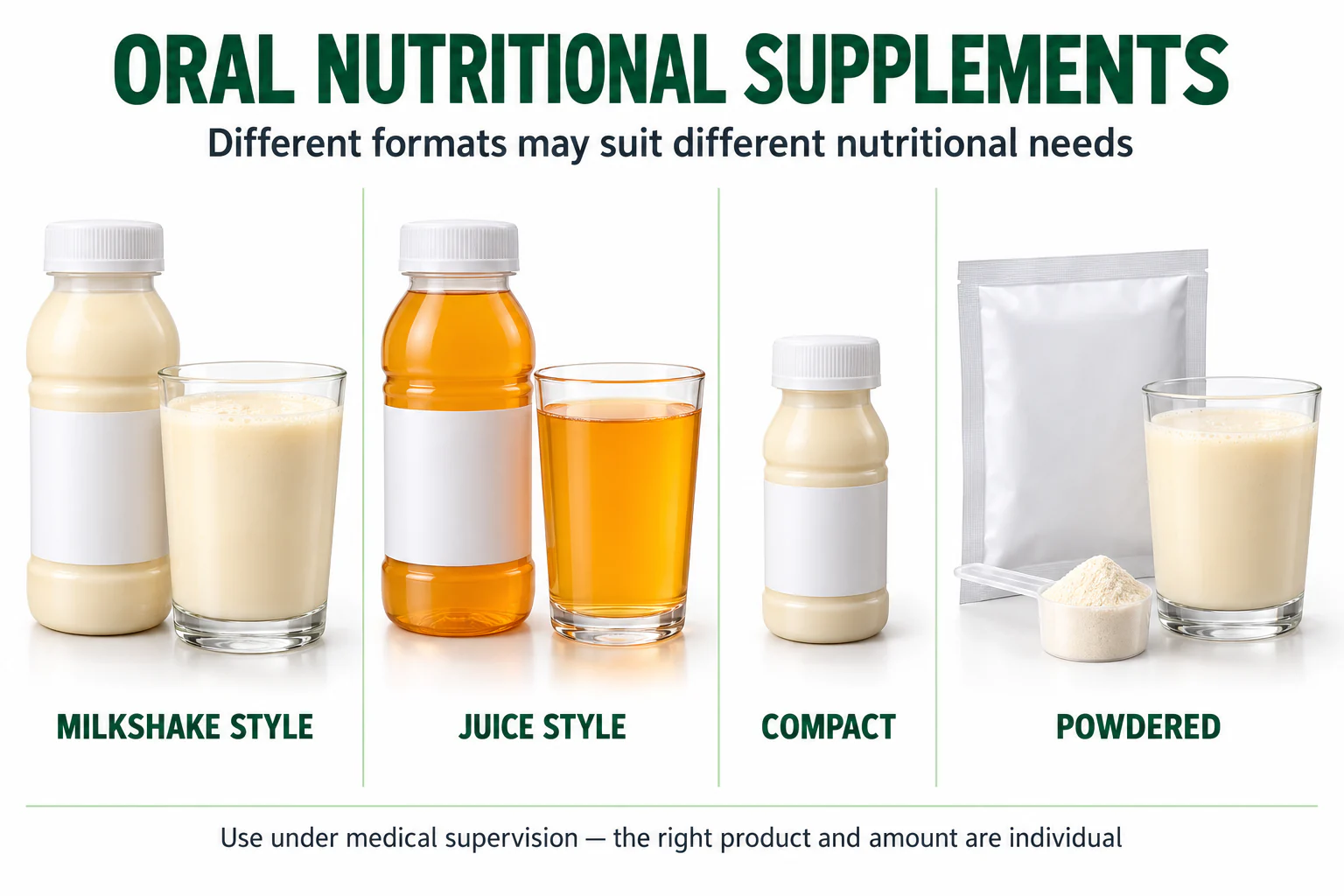
The most appropriate format, nutritional composition and amount depend on individual needs and tolerance. These generic examples do not represent a particular brand or product.
© 2026 Dyslexic Dietitian / DD Medical Atlas. All rights reserved.Using supplements effectively
- Take the amount and type advised; products are not interchangeable for every medical or nutritional need.
- They are commonly taken between meals or before bed so they do not unnecessarily reduce appetite for food.
- Serving them chilled, using a straw, dividing them into smaller amounts or trying another suitable flavour or format may improve tolerance.
- Continue meals, snacks and drinks unless your healthcare professional has advised otherwise.
- Report nausea, diarrhoea, constipation, taste fatigue or difficulty finishing them so the plan can be adjusted.
A doctor, dietitian or other appropriately trained clinician should review whether supplements are helping by monitoring weight, intake, symptoms, function and the underlying condition. The plan may be changed or stopped once adequate intake from food is re-established.
Shop-bought protein shakes, meal replacements and vitamin tablets are not automatically equivalent to clinically advised oral nutritional supplements. Ask for advice before substituting one product for another.
08
Managing symptoms that make eating difficult
- Nausea: try small portions, cooler foods and plainer options; ask for help if nausea persists or medicines may be contributing.
- Dry or sore mouth: choose moist foods, add sauces and address oral hygiene, dental problems or thrush.
- Taste changes: try different temperatures, marinades, herbs or sharper flavours where comfortable.
- Fatigue: use ready-prepared foods, batch cooking, seated preparation and help from family, carers or community services.
- Swallowing difficulty: seek assessment from a GP and speech and language therapist. Do not change food or drink texture without appropriate advice.
09
Monitoring whether support is helping
Agree what will be monitored and how often. This might include weight trend, appetite, food and fluid intake, strength, function, wound healing, bowel symptoms and whether the plan is manageable.
Weight may be checked weekly or at another agreed interval rather than daily. Similar clothing, scales and time of day make trends easier to interpret. Improvement may also show as more energy, better function or stabilised weight before weight gain occurs.
10
When to seek medical help
Arrange an assessment if weight loss is unintentional, appetite remains poor, clothes are becoming loose, strength is declining, eating has been substantially reduced, or symptoms are interfering with food and drink.
Seek prompt medical advice for difficulty or pain when swallowing, repeated choking or coughing with meals, persistent vomiting, blood in vomit or stools, black stools, severe or worsening abdominal pain, marked dehydration, confusion, or rapid deterioration.
11
How a dietitian can help with nutritional support
A dietitian can assess the severity and causes of unintentional weight loss using weight history, appetite, food intake, symptoms, muscle loss, function and relevant medical information. They can estimate energy, protein and fluid needs and agree a practical food-first plan using smaller meals, snacks, nourishing drinks and food fortification.
When food alone is insufficient, a dietitian can advise on the most appropriate type, amount and timing of prescribed oral nutritional supplements and monitor whether they are helping. They can adjust the plan for nausea, diarrhoea, constipation, swallowing problems or disease-related requirements, and coordinate with the medical, nursing, pharmacy and speech and language therapy teams. People at risk of refeeding problems require medically supervised nutrition support.
View consultation information12
Trusted information
- NICE: Nutrition support for adults
- NICE: Nutrition support recommendations
- NHS: Malnutrition
- NHS: Unintentional weight loss
- NHS: Treating malnutrition
- BAPEN: Malnutrition Universal Screening Tool (MUST)
- Nutricia: Adult oral nutritional supplement range
- Fresenius Kabi: Fresubin ready-to-drink range
- Nestlé Health Science: Resource range