
01
What weight management means
Weight management may involve preventing further weight gain, losing weight, maintaining a change or improving health behaviours without making weight the only measure of success.
Body weight is affected by energy intake and expenditure, but those are influenced by appetite hormones, genetics, sleep, stress, mobility, illness, medicines, income, food access and the surrounding environment. This helps explain why the same approach does not work equally well for everyone.
02
Starting with assessment
A useful assessment looks beyond the number on the scales. It may include your medical history, medicines, blood results, eating pattern, sleep, activity, mobility, previous attempts, mental wellbeing and what you want support with.
BMI
Body mass index relates weight to height and can help estimate population-level health risk. It does not distinguish fat from muscle or describe fat distribution, fitness or overall health.
Waist-to-height ratio
For adults with a BMI below 35 kg/m², NICE recommends considering waist circumference so waist-to-height ratio can be calculated. This adds information about central adiposity.
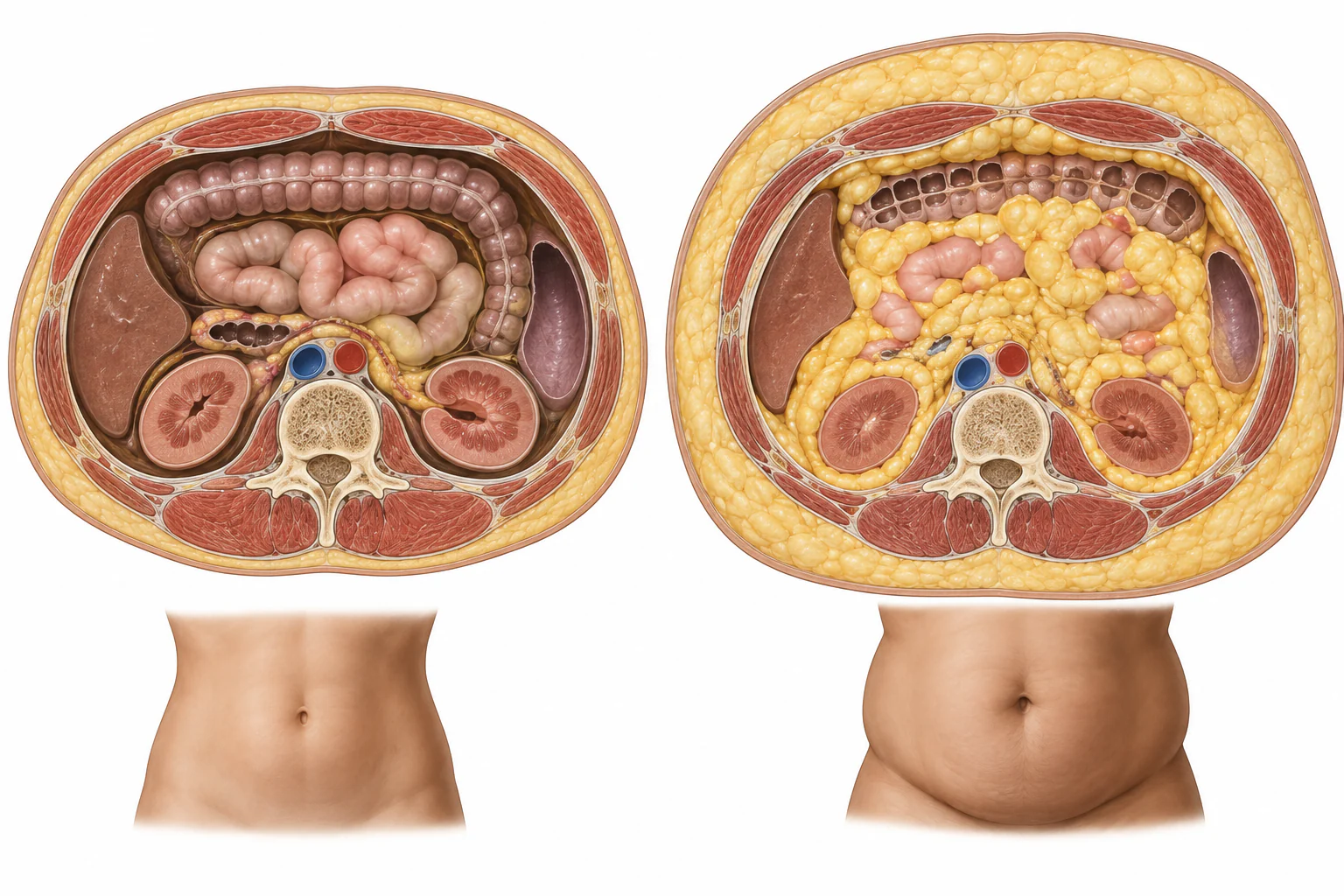
Body composition describes the proportions of fat mass, fat-free mass, muscle, bone and body water. This illustration focuses on subcutaneous fat beneath the skin and visceral fat around the abdominal organs. People with the same weight or BMI can have different body compositions and fat distributions, so this image cannot assess health on its own.
© 2026 Dyslexic Dietitian / DD Medical Atlas. All rights reserved.Risk can occur at lower BMI thresholds for people from some ethnic backgrounds. Measurements should be interpreted alongside individual health, not used as a judgement of worth.
03
Choosing useful goals
Start with goals that matter to you and can be observed. Examples might include improving energy, mobility, breathlessness, blood pressure, glucose levels, sleep, meal regularity or confidence with food.
- Choose one or two changes rather than rebuilding everything at once.
- Make the action specific enough to repeat and review.
- Plan for weekends, travel, social events and difficult days.
- Review what helped instead of treating a setback as failure.
- Use weight monitoring only if it is useful and psychologically safe for you.
Gradual change is usually easier to sustain. Health benefits from improved eating and physical activity can occur even when weight changes slowly or not at all.
04
Building satisfying meals
There is no single best weight-management diet. A workable pattern provides adequate nutrition, creates an appropriate energy deficit when weight loss is intended, and fits your preferences, culture, budget and health needs.
A flexible meal structure
- Include protein across the day to support fullness and muscle maintenance.
- Choose fibre-rich foods such as vegetables, fruit, pulses and wholegrains where tolerated.
- Pay attention to portions of energy-dense foods without labelling foods as “good” or “bad”.
- Review drinks, alcohol, snacks and takeaway portions if they contribute substantial energy without much satisfaction.
- Keep enjoyable foods in the plan in quantities and frequencies that support your goals.
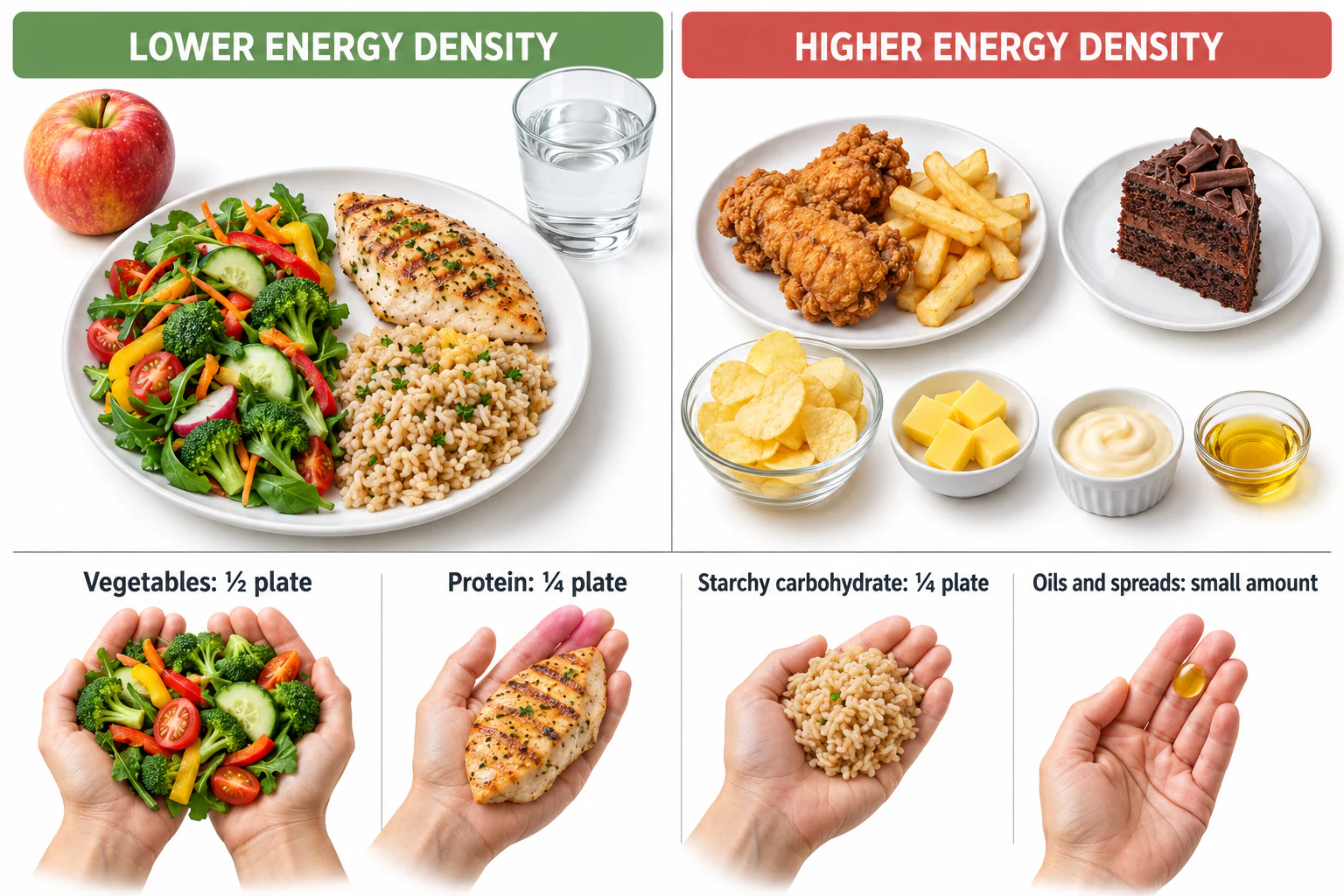
Fruit and vegetables can add volume, fibre and variety for relatively few kcal. A flexible plate guide is around half vegetables, one quarter protein and one quarter starchy carbohydrate. Oils, spreads and other high-fat foods provide more energy in a smaller amount, so modest portions may help when reducing energy intake. These examples are a guide rather than a personalised prescription.
© 2026 Dyslexic Dietitian / DD Medical Atlas. All rights reserved.What does kcal mean?
A kilocalorie—written as kcal on food labels—is a unit of energy. In everyday nutrition language, one “Calorie” with a capital C means the same as one kilocalorie. Your body uses energy for basic functions, digestion, movement, temperature regulation, growth and repair.
How calorie counting can help
Weight loss requires average energy intake to remain below energy expenditure over time. Calorie counting can make the energy contribution of meals, drinks and portions more visible and may help some people create that energy deficit.
- Begin by observing a few typical days before deciding what to change.
- Use the kcal information per portion and per 100 g on food labels, checking whether your portion matches the manufacturer’s serving.
- Include drinks, alcohol, cooking oils, sauces, snacks and extras, which can otherwise be easy to overlook.
- Measure unfamiliar portions temporarily if it helps you learn, rather than assuming everything must be weighed indefinitely.
- Continue to consider protein, fibre, fruit, vegetables, vitamins and minerals—two meals with the same kcal value may differ greatly in nutrition and satisfaction.
Calorie figures are estimates
Food labels, recipes, restaurant information, tracking apps and estimates of energy needs all contain some uncertainty. Daily expenditure also changes with body size, muscle, age, activity, health and weight change. Treat the numbers as a practical guide rather than a test that must be completed perfectly.
Calorie tracking is optional. Stop and seek advice if it increases anxiety, guilt, compulsive checking, binge eating or rigid food rules. It may be inappropriate for people with a current or previous eating disorder unless used within specialist care.
05
Appetite and eating patterns
Hunger is biological, not a lack of discipline. Restrictive dieting can increase hunger and food preoccupation, making an approach harder to maintain.
Regular meals, protein, fibre, adequate fluid and less rushed eating can improve satisfaction. It can also help to notice other reasons for eating, such as habit, tiredness, emotions, availability or social situations, without treating them as personal failings.
06
Movement and protecting muscle
How activity can support an energy deficit
Physical activity increases the energy your body uses. Together with an appropriate food intake, this can contribute to the average kcal deficit needed for weight loss. The amount used varies with the type, intensity and duration of activity, as well as body size and fitness, so exercise trackers and machines provide estimates rather than exact figures.
Exercise often produces only modest weight loss when used alone, and activity does not need to be used to “earn” food. Its value is much wider: regular activity can support weight maintenance, cardiovascular fitness, blood pressure, insulin sensitivity, blood glucose, strength, mobility, bone health, mood and sleep—even when body weight changes very little.
Exercise and HDL cholesterol
HDL means high-density lipoprotein. It is often called “good cholesterol” because HDL particles help carry excess cholesterol away from tissues and blood-vessel walls to the liver, where it can be recycled or removed. Regular aerobic activity may increase HDL and can also improve triglycerides and other aspects of cardiovascular health.
HDL is only one part of a cholesterol result. A higher value is not always better, and cardiovascular risk also depends on LDL and non-HDL cholesterol, blood pressure, smoking, diabetes, age and other health factors. Blood-test results should therefore be interpreted by a healthcare professional in context.
Resistance exercise and adequate dietary protein help protect muscle during weight loss. This is especially important for older adults, people losing weight rapidly and anyone using weight-management medication.
Begin gradually if you are inactive, have pain or live with a long-term condition. A healthcare or exercise professional can help adapt activity safely. NICE recommends becoming more active even if weight does not change because the wider health benefits still matter.
07
Sleep, stress and wellbeing
Short or disrupted sleep can affect appetite, energy, food choices and motivation. Stress, low mood and anxiety can also change eating patterns, while weight stigma may make it harder to seek healthcare or take part in activity.
Sleep routines, stress-management strategies and appropriate mental-health support may therefore be part of weight-management care. They are not substitutes for nutrition or medical treatment, but they can make other changes more achievable.
08
Medicines and surgery
Weight-management medicines may be appropriate for some adults after an assessment of BMI, weight-related conditions, previous support, benefits, risks and prescribing criteria. They should be prescribed through a legitimate healthcare service and used alongside nutritional, activity and behavioural support.
Medicines can reduce appetite or change digestion, so monitoring may be needed for side effects, nutritional intake, hydration, muscle loss and interactions with other conditions or medicines. Weight regain can occur after treatment stops; longer-term planning matters.
Bariatric surgery is an effective treatment for selected people and requires specialist assessment. It involves lifelong nutritional monitoring, prescribed vitamin and mineral supplementation, and changes to eating and drinking.
09
When to seek additional support
Speak to a healthcare professional before beginning a weight-loss programme if you are pregnant or breastfeeding, have diabetes or another condition affected by dietary change, take medicines that may need adjustment, have unexplained weight change, or are considering a very-low-energy diet.
Seek specialist support if eating feels out of control, you regularly binge, purge or compensate, food rules are becoming rigid, or weight and shape concerns are dominating daily life. Weight-focused advice may be inappropriate while an eating disorder is being assessed or treated.
10
How a dietitian can help with weight management
A dietitian can estimate a realistic energy target and help create a sustainable calorie deficit without rigid rules or nutritionally unbalanced dieting. The plan may address portions, protein, fibre, meal structure, hunger and the food environment while supporting movement that is safe and achievable for you.
Progress can be assessed through health, strength, habits and quality of life as well as weight. A dietitian can adapt nutrition around diabetes, digestive conditions, limited mobility, menopause, weight-management medicines or bariatric surgery, and help protect muscle and micronutrient intake. Where restrictive eating, binge eating or an eating disorder is suspected, they can recommend the appropriate specialist support.
View consultation information11
Trusted information
- NICE: Overweight and obesity management
- NICE: Physical activity and dietary approaches
- NICE: Weight-management medicines and surgery
- NHS: Overweight and obesity in adults
- NHS Better Health: Calories and weight loss
- NHS: Tips to support weight loss
- NHS: Understanding cholesterol levels
- HEART UK: What HDL cholesterol means
- British Dietetic Association: Weight loss